
Project BOX-SAT :
The objective is to establish, with an open source ethic, a universal box-sat format that is economical, modular and scalable, that uses cold welding in the vacuum of space to build infrastructure for the future of space based A.I. server centers, like Elon Musk’s STARMIND.
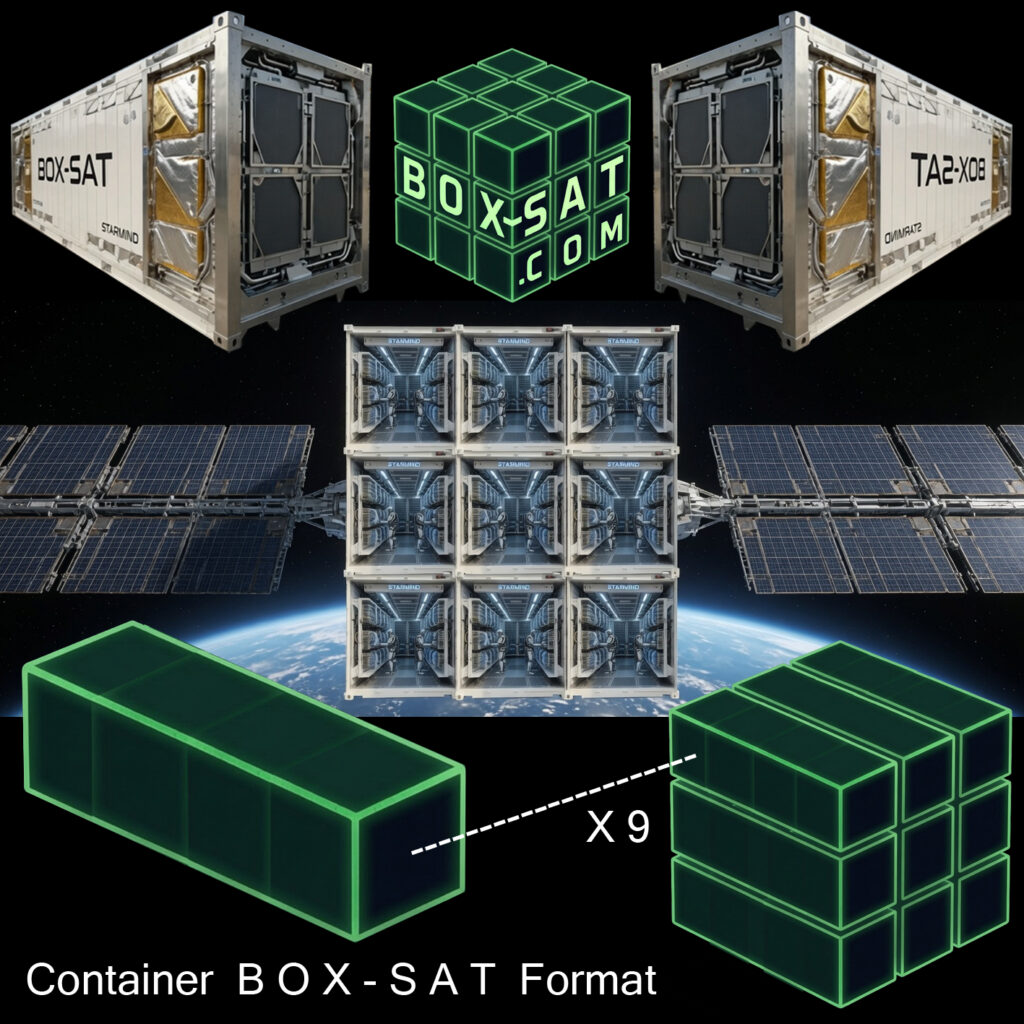
Container-Box-Sat (C-B-S), Sharing it’s dimensions with a standard shipping container format (40ft High Cube) is great for Earth logistics, the new design is fully developed for space flight on the Falcon Heavy where the standard or extended fairing accommodates it. C-B-S has flat sides that are ideal for cold welding in the vacuum of space. The basic module server block is designed to operate in a vacuum in space, maintenance by Optimus robots and Grok / SpaceXAI with a human in the loop. C-B-S is to be utilized in various versions such as server blocks, human habitation blocks, nuclear power block featuring a Microreactor and robot blocks, C-B-S format is economical, modular and scalable in a 9 stack + server center format as illustrated below.
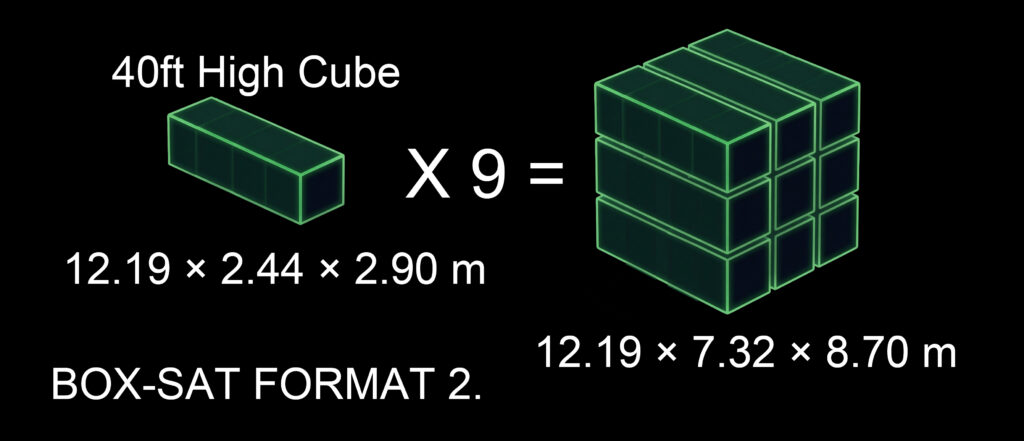
Above is the V.2. Container-BOX-SAT (C-B-S) format, It’s low-cost per unit is the key for this design that can be produced at scale as an alternative future option for A.I. and STARMIND server centers.
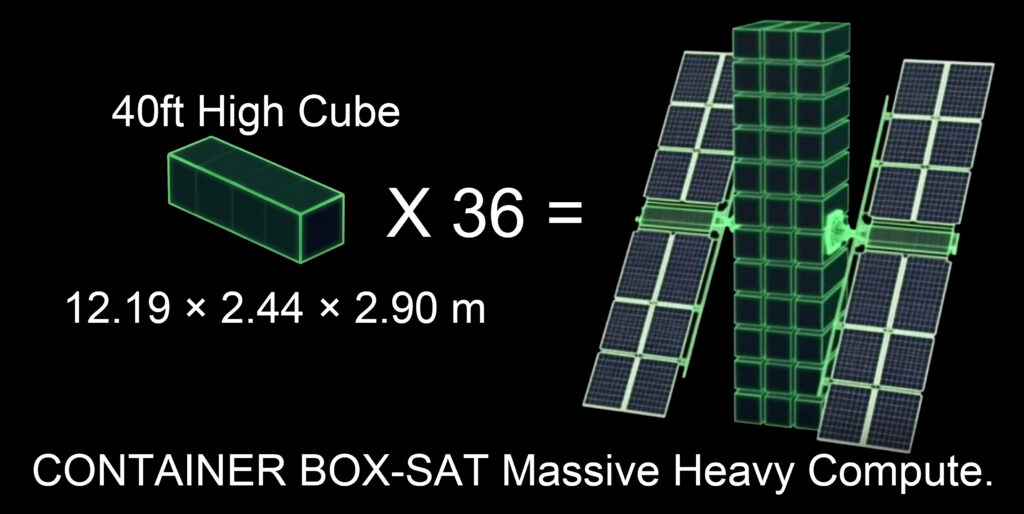
New Scale: Massive Heavy Compute (MHC) While the baseline Container BOX-SAT configuration uses a 9 module stack, the design is inherently scalable. A larger Massive Heavy Compute (MHC) formation of 36 C-B-S modules arranged in a 12 x 3 stack has been explored. This expanded configuration is cold welded in orbit and can support significantly higher computational density (4X). When fitted with large solar arrays, the MHC version becomes a self powered orbital AI infrastructure node capable of supporting STARMIND scale workloads. The modular nature of the CBS format allows growth from the initial 9 stack to much larger formations as demand and launch cadence increase, delivering true economic scalability for space based A.I.
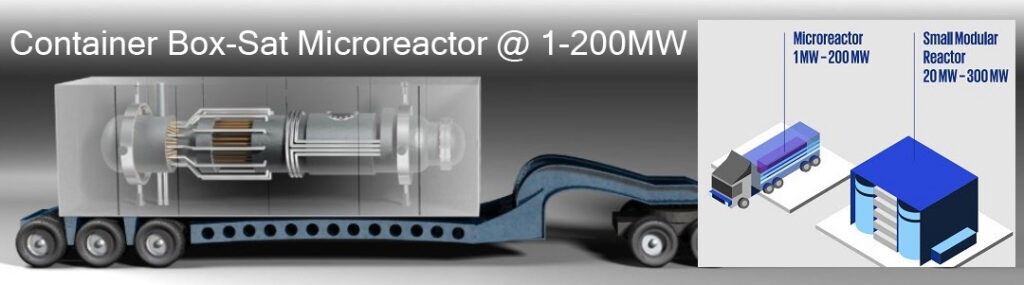
A nuclear power block featuring a Microreactor is an obvious choice for a Box-Sat stack of this scale.
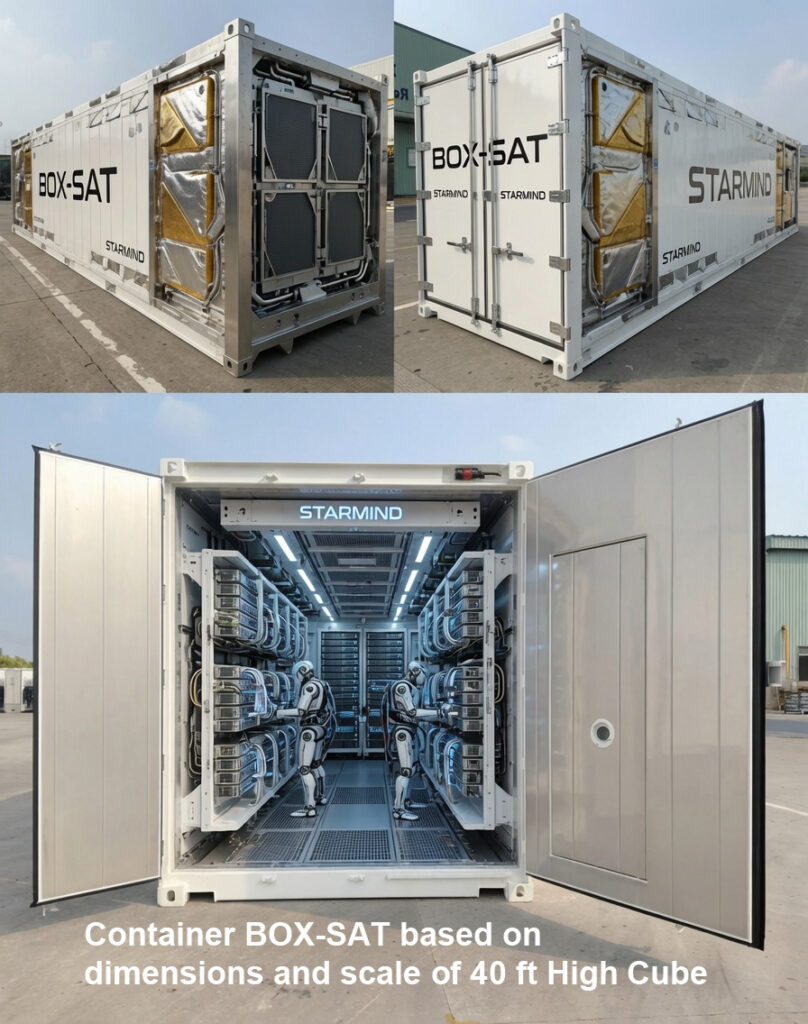
Below shows 40 ft high cube images transformed with Grok to reflect first draft of Container-Box-Sat format.
Grok verdict : Bottom line; A reinforced 40ft High Cube BOX-SAT is one of the most practical modular formats currently proposed for Falcon Heavy. The rocket has more than enough performance, the fairing accommodates it, and the flat sides are ideal for in-orbit cold welding into larger 3×3 or expandable clusters. The main engineering work is structural reinforcement and thermal/vibration management, both well understood domains in the space industry.
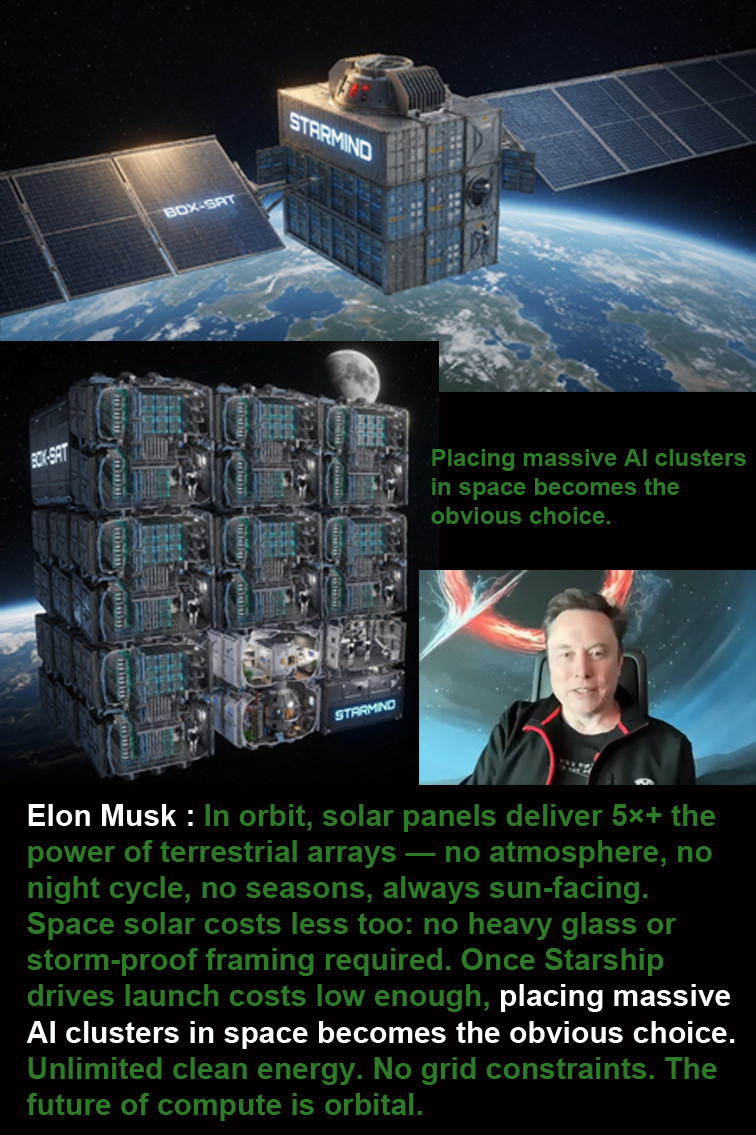
Welcome to project box-sat.com , this project evolved from the launch of STARMIND concept by SpaceXAI and Elon Musk’s statement ‘Placing massive AI clusters in space becomes the obvious choice’.
This site is a conceptual/fan proposal, not affiliated with SpaceXAI, Elon Musk or any of his companies.
This site is a science fiction near future project of potential options for the ‘Space Race’ that could become science fact.
| 4 ‘Space Race’ concepts : |
| 1. Designs for STARMIND server centers |
| 2. Lunar Starship versions |
| 3. Centrifugal gravity for Mars transit. |
| 4. Jeep identity for Lunar and Mars rovers |
1. Designs for STARMIND server centers :
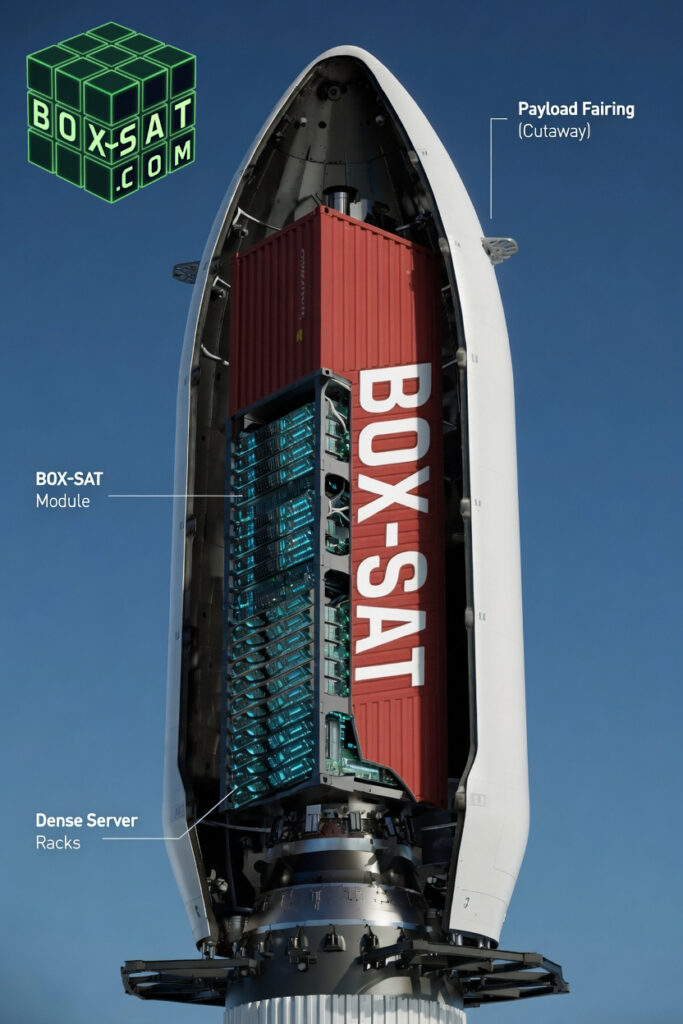
Below is a cutaway of the fairing of a Falcon Heavy revealing a Container-BOX-SAT (C-B-S) server block, with a cutaway showing server blades, explained in context further down the page.
Elon Musk : STARMIND ; ‘It’s possible to scale compute power much more easily in space than on land. Once you have a reusable rocket and satellites manufactured at scale’.
‘To advance up the Kardashev scale, we need to put satellites in Earth’s orbit and capture solar energy. This removes the need to build massive power plants on Earth and deal with cooling. Cooling in space is much easier via radiative heat loss in a vacuum’.
Project
B O X – S A T . c o m
This project started by making a backronym with Grok for STARMIND (Satellite Technology for Advanced Reasoning Machine Intelligence Network Deployment) that in turn evolved into this concept of project box-sat, a page on how future STARMIND stacks could be deployed using the C-B-S format.
The potential of STARMIND as a concept to evolve with economies of scale and mass production, to the Container-Box-Sat (C-B-S) format, in many varieties of 9 stack or more A.I. server center satellites, viable and deployable in the not too distant future.
Below is a video on cold welding, key to BOX-SAT STARMIND stacks being constructed, amazing !
Video on Cold Welding by ‘Beyond Earth’ https://youtu.be/OWWhUOC_bMc?si=iDmcHsPsaBdIy_Mx
Cold welding in space occurs when clean metal surfaces bond at the atomic level in a vacuum without heat, posing both challenges and opportunities for spacecraft design. Cold welding, also called contact welding or stiction, is a solid-state process where two metal surfaces join without melting or heating at the interface. In space, the vacuum environment removes atmospheric contaminants like oxygen and moisture, which normally form oxide layers on metals. When two clean, flat metal surfaces come into contact under these conditions, their atoms can merge directly, effectively forming a single piece of metal. This occurs because the atoms cannot “know” they belong to separate pieces, allowing strong adhesion at the atomic level.
Below is link to Box-Sat V.1. format
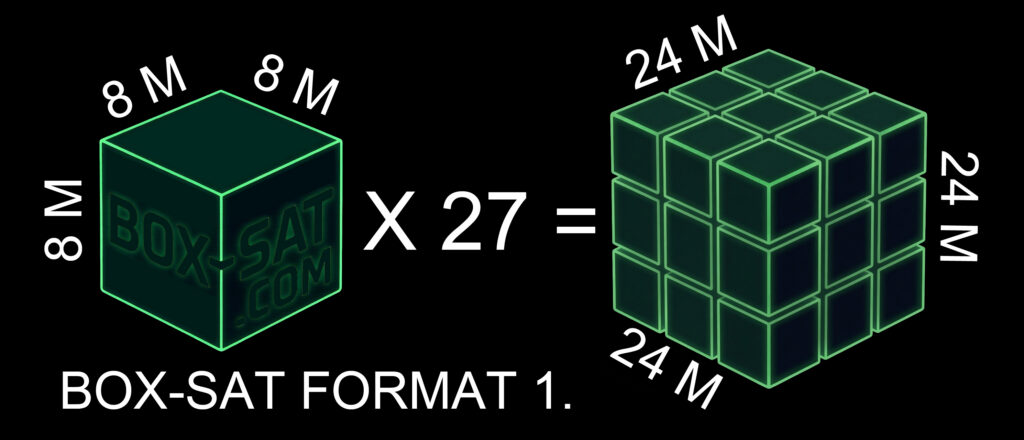
Below is V.2. Container-BOX-SAT (C-B-S) format.
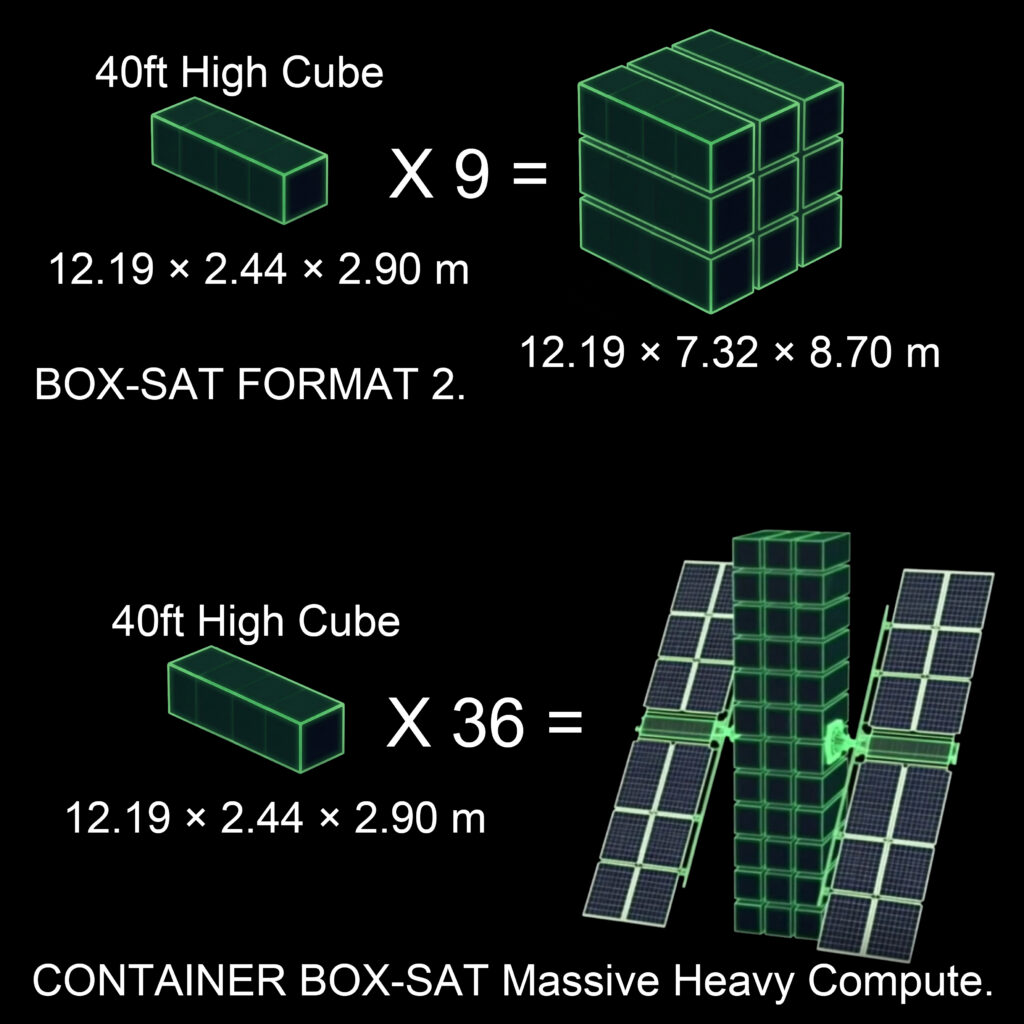
C-B-S design is a new, fully space worthy unit, only sharing dimensions with the 40ft High Cube freight box standard.
Space based Container-Box-Sat server block format, like above, would feature full accessibility for the human form factor, be that android or astronaut.
Location for expansion is one of the next obvious choices on the evolutionary scale of A.I. be that in space, Lunar or under water on Earth, a situation that is evolving and developing rapidly, with it’s majority future near guaranteed in space, C-B-S format could well become an intrinsic part of the orbital A.I. infrastructure development solution.
Concept page for Container-Box-Sat (C-B-S) :
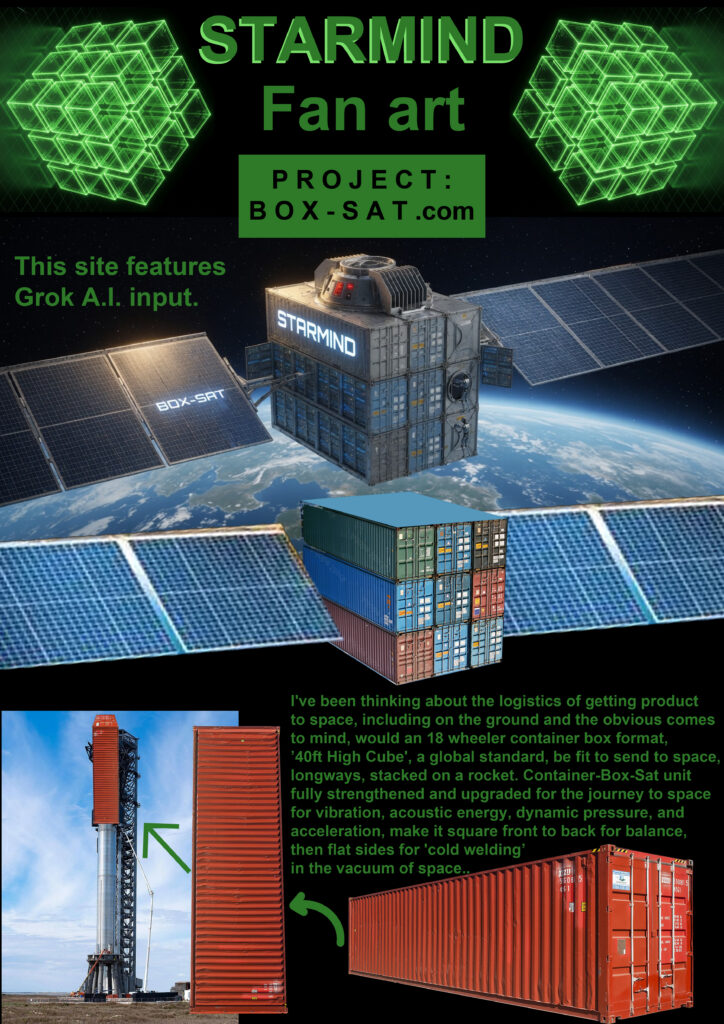
Because of the sheer scale of Starship and Super heavy launcher I have concluded that the smaller Falcon (latest iteration in heavy lift format) is better suited to launching the CBS format to space.
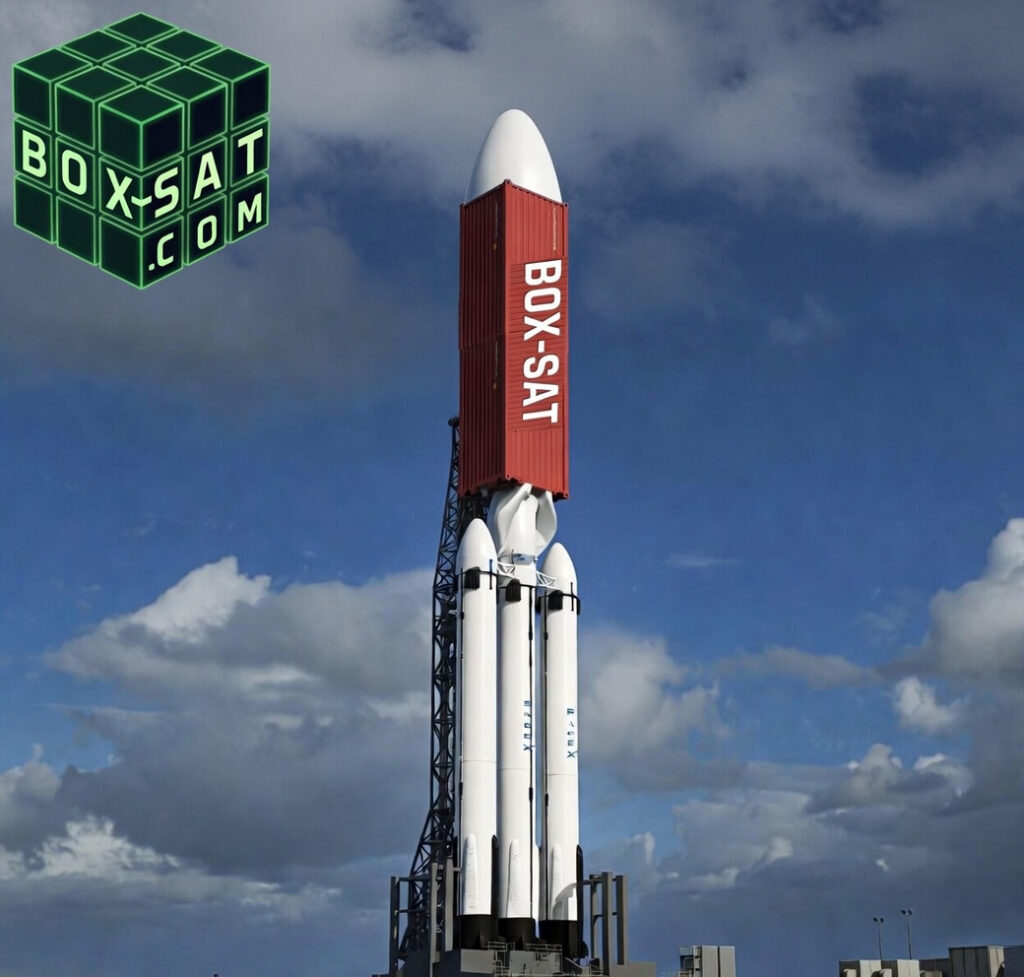
The BOX-SAT is in launch position minus fairing enclosure, just to show scale of rocket and BOX-SAT payload.
Below is an image of how it would look if container box-sat format was completely enclosed in a fairing.
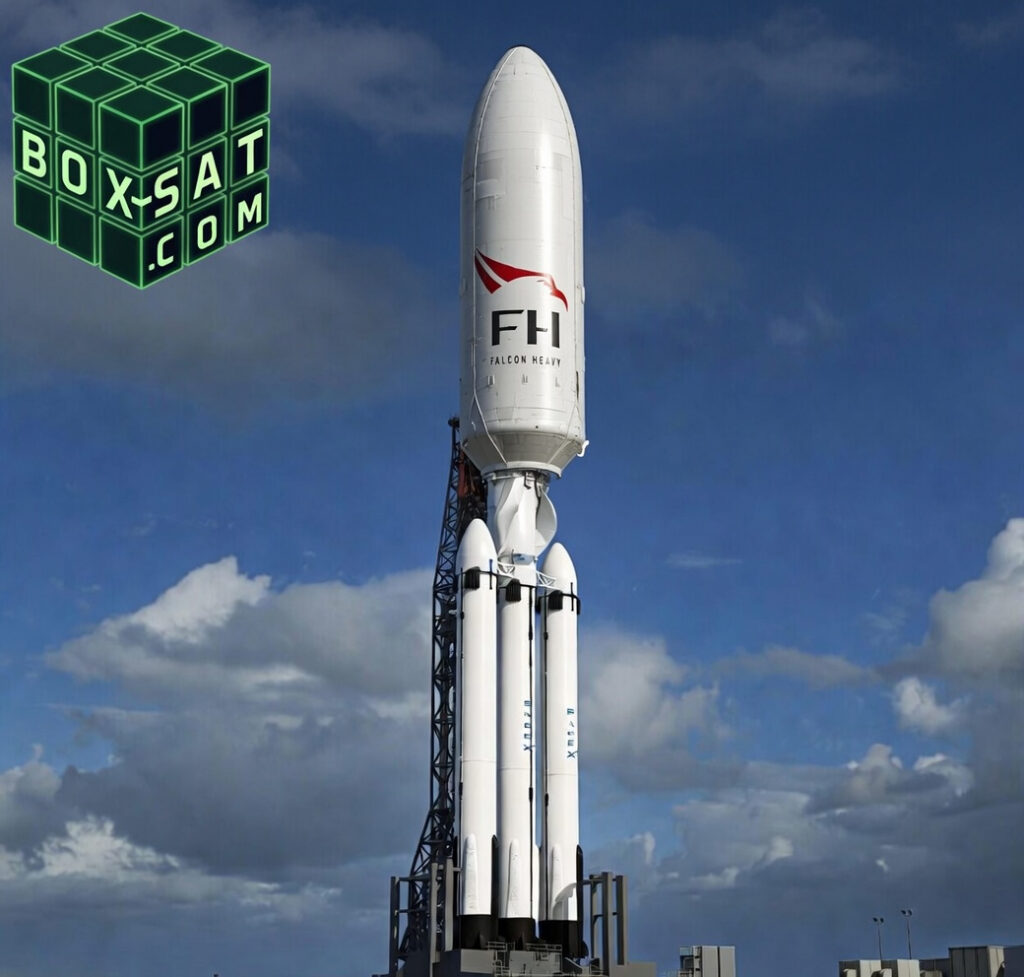
Below is a cutaway of the fairing of a Falcon Heavy revealing a C-B-S server block, it too with a cutaway revealing server blades.
Designed for the journey to space in various modular formats including not just server blocks but pressurized human accommodation blocks, robot blocks and nuclear power blocks, 9 + C-B-S assembled in a stack.
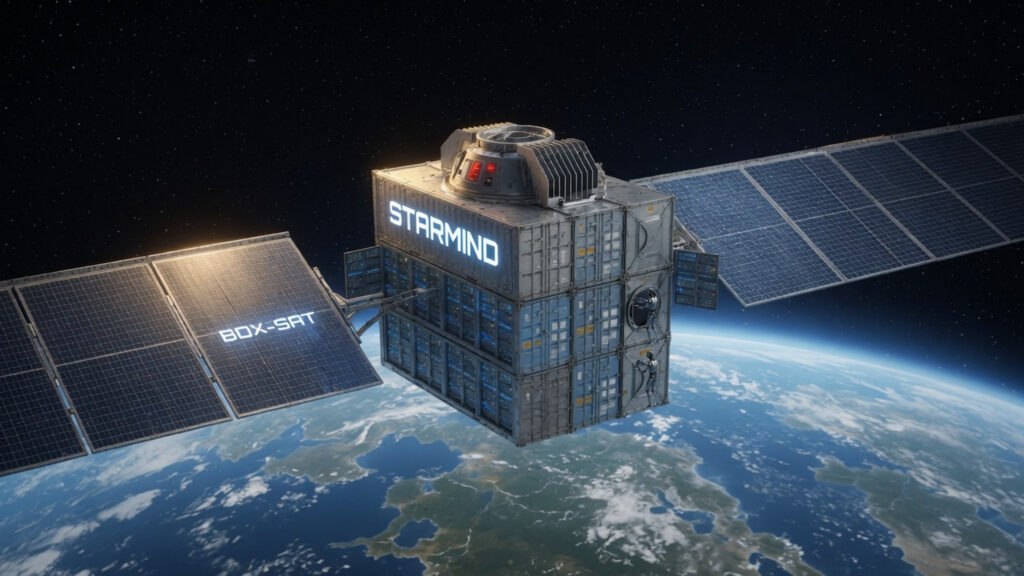
Container-BOX-SAT (C-B-S) as the future design format alternative for a STARMIND server center, 9 + module stack, variable and scalable for future expansion.
Conclusion :
The Container-BOX-SAT (C-B-S) format in a basic 9 to MHC 36+ stack offers a future where the Massive Heavy Compute version becomes a self powered orbital AI infrastructure node capable of supporting STARMIND scale workloads, it’s a practical, modular, economic and scalable path to orbital A.I. infrastructure. Designed for in-space assembly and expansion, it stands as a logical and adaptable alternative for future A.I. / STARMIND scale server center clusters.
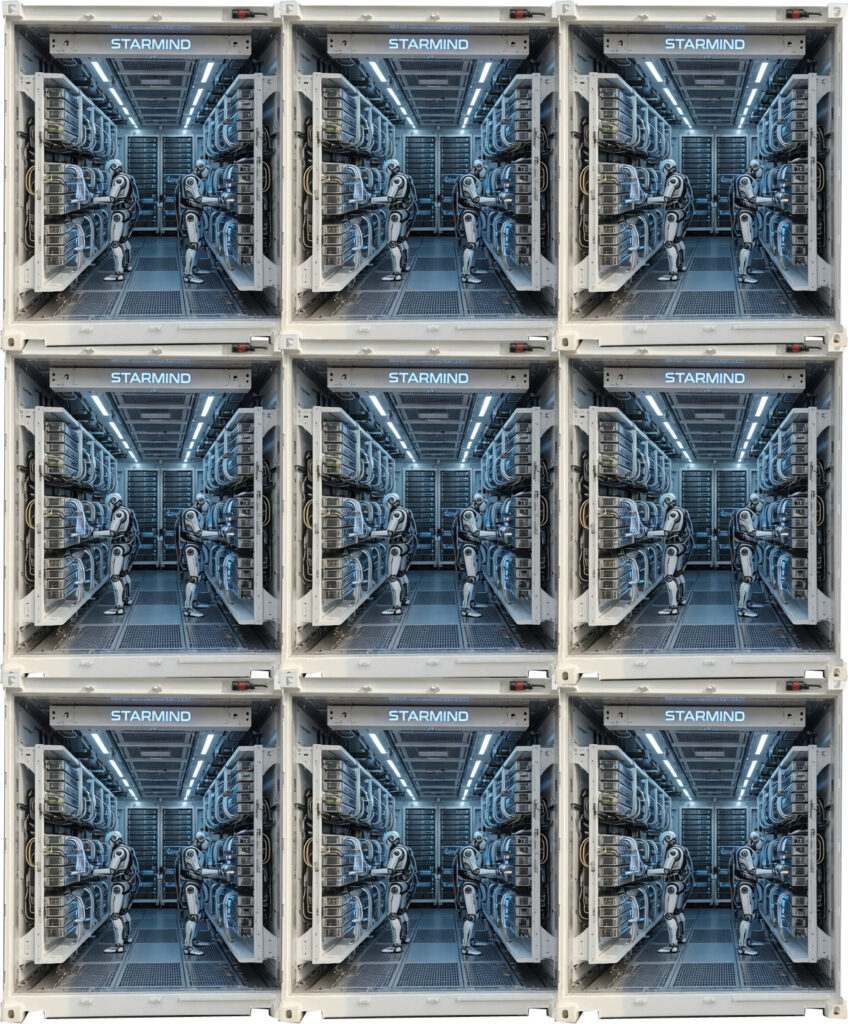
Grok verdict :
Here’s a clear, realistic feasibility analysis of launching a reinforced 40ft High Cube shipping-container-style BOX-SAT on Falcon Heavy as an orbital data-center module.
1. Falcon Heavy Payload Capacity to Low Earth Orbit (LEO)
| Configuration | Payload to LEO | Notes |
|---|---|---|
| Fully Expendable | 63,800 kg | Maximum theoretical capacity |
| Side boosters recovered | ~57,000 kg | Most realistic early-mission scenario |
| Fully reusable (all recovered) | ~18,000–30,000 kg | Significant performance penalty |
Verdict on lift capacity: Excellent. Even a heavily reinforced and fully equipped 40ft High Cube module (structure + servers + cooling + power systems) can comfortably stay well under the realistic ~57-ton limit.
2. Fairings for Aerodynamics and Stability? Yes — a full payload fairing is required.
- A bare rectangular shipping container mounted on the rocket would create severe aerodynamic drag, instability (especially in the transonic regime), and high structural loads.
- Falcon Heavy uses the standard Falcon 9-class fairing:
- Outer diameter: 5.2 m
- Standard overall height: ~13.1–13.2 m
- Extended fairing option available (~18.7 m height)
- A 40ft High Cube (external length 12.19 m) fits vertically inside the standard or extended fairing with room for a nose cone / payload adapter.
- Side fairings are not needed if the container is fully enclosed inside the main fairing.
- Recommended approach: Mount the container vertically, enclose it completely in the fairing, and use a proper payload adapter at the base.
3. 40ft High Cube Dimensions (Standard ISO)
| Dimension | Value |
|---|---|
| External Length | 12.19 m (40 ft) |
| External Width | 2.44 m (8 ft) |
| External Height | 2.90 m (9 ft 6 in) |
| Internal Volume | ~76 m³ |
| Typical Tare Weight | 3,700–4,200 kg |
It fits comfortably inside the 5.2 m diameter fairing when oriented vertically.
4. Required Strengthening and Upgrades for Space Launch + Data Center Use A standard shipping container is designed for stacking, road/rail transport, and static loads — not for rocket launch environments (multi-g acceleration, intense random vibration, high acoustic noise ~140+ dB, shock events, and thermal extremes).External structural upgrades needed:
- Reinforced corner castings and main longitudinal frame (thicker high-strength steel or aluminum alloy + gussets)
- Additional longitudinal stringers along the length
- Transverse bulkheads / ring frames for stiffness against bending and torsion
- Dedicated payload adapter interface at the base (strong mounting points matching Falcon Heavy’s payload attach fittings)
- Thermal protection / Multi-Layer Insulation (MLI) blankets on the exterior
- Integrated radiator panels or heat pipes on the sides for radiative cooling in vacuum
- Possible micrometeoroid / debris shielding (depending on orbit)
Internal upgrades for data-center function + launch survival:
- Dense internal framing (I-beams or box sections) to support floor-to-ceiling server racks
- Vibration isolation mounts for all sensitive electronics and hard drives
- Reinforced floor and ceiling for heavy server blade loading
- Integrated cable routing channels, power distribution, and cooling ducts (liquid cooling preferred for high-density AI servers)
- Possible partial internal pressure vessel sections (if any human-accessible or pressurized zones are desired)
- Radiation-tolerant electronics or shielding where needed
- Thermal control system designed for vacuum (no air convection)
Overall philosophy: Convert the container from a “shipping box” into a rigid space-rated module while keeping external dimensions close to standard ISO so that multiple units can still stack and cold-weld cleanly in orbit.
5. Estimated Weight of a Fully Fitted 40ft High Cube BOX-SAT
| Component | Approximate Mass |
|---|---|
| Empty reinforced structure | 5,000–8,000 kg |
| Server racks + blades (dense AI) | 12,000–20,000 kg |
| Cooling, power, cabling, PDUs | 3,000–6,000 kg |
| Thermal systems, radiators, MLI | 1,000–3,000 kg |
| Payload adapter + margins | 1,000–2,000 kg |
| Total realistic loaded mass | 25–35 tons |
- Lower end (~25 t) is achievable with optimized high-density but not extreme AI loads.
- Upper end (~35–40 t) is still well within Falcon Heavy’s capability in the side-boosters-recovered configuration.
- This leaves significant mass margin for additional systems (nuclear power module interface, solar array deployment mechanisms, etc.).
Overall Feasibility Verdict
| Aspect | Assessment | Notes |
|---|---|---|
| Lift Capacity | Excellent | Plenty of margin |
| Aerodynamics | Requires full fairing | Fully solvable |
| Structural Strength | Major modifications needed | Standard container is not flight-ready |
| Volume / Form Factor | Good | Fits well vertically |
| Cold-welding assembly | Highly compatible | Flat sides ideal |
| Overall Feasibility | Plausible near-term concept | Realistic with proper engineering |
Bottom line: A reinforced 40ft High Cube BOX-SAT is one of the most practical modular formats currently proposed for Falcon Heavy. The rocket has more than enough performance, the fairing accommodates it, and the flat sides are ideal for in-orbit cold welding into larger 3×3 or expandable clusters. The main engineering work is structural reinforcement and thermal/vibration management — both well-understood domains in the space industry.
Nice verdict from Grok, next stage is to promote the CBS format to space organizations in the West. No point targeting general public for support as there is little interest in cold welding in a vacuum. Time to knuckle down and start a database of potential contacts.
Should box-sat.com become a non profit, open source format operation?
Open Source Direction for the Container BOX-SAT (CBS) Format. The Container BOX-SAT (CBS) format is currently a conceptual design released for public discussion and exploration. At this stage the project remains a solo conceptual effort. The goal is to keep the core idea open so that engineers, students, and interested parties can freely study, comment on, and improve the concept. Near-term approach (now – next 6–12 months) The CBS concept, including the baseline 9-stack and the larger Massive Heavy Compute (MHC) 36-module configuration, is released under a permissive open license (Creative Commons or equivalent open-hardware style terms).
Basic specifications, interface ideas, and scaling principles will be published for reference.
Feedback and suggested improvements are welcome.
Medium-term possibility (12–24 months)
If sustained community interest and concrete contributions develop, a public repository (e.g. GitHub) will be established to host more detailed documentation, interface definitions, and collaborative updates. Contribution guidelines and a clear license will be published at that time. Longer-term option
Only if a genuine collaborative community forms and ongoing maintenance becomes necessary would the formation of a formal non-profit organization be considered. Establishing a non-profit involves legal registration, governance structures, compliance requirements, and ongoing administrative overhead — steps that are premature while the project remains primarily conceptual. The intention is to keep the C-B-S format open for exploration and improvement while matching the level of formal structure to the actual stage of development and community involvement.
In short still a long way to go, if you like the site and want to contribute your ideas, comments or constructive critique either email me via contact page or by my ‘ X ‘ account www.x.com/Hive_Berry drop me a line, I may well publish it on the site with your own sub page.
—————————————————————————————————————-
Button below is link to earlier Box-Sat concept evolution :
Thank you for checking out this project site, it is evolving daily so remember to check back soon. Please follow my ‘X’ account, link below, Thanks for your time. Eddy Crowley.